
Año Nuevo State Park draws thousands of people from around the world every year. With a moderate walk you can experience this natural environment and learn about elephant seals as well as other features of the park from trained volunteer docents.
This park includes the Año Nuevo State Natural Preserve—protecting the mainland’s first breeding colony of northern elephant seals—as well as other areas surrounding the park such as Cascade Field, Franklin Point and Gazos Creek on the coastal side of Highway 1 and the Año Nuevo Cultural Preserve on the eastern side of the highway.
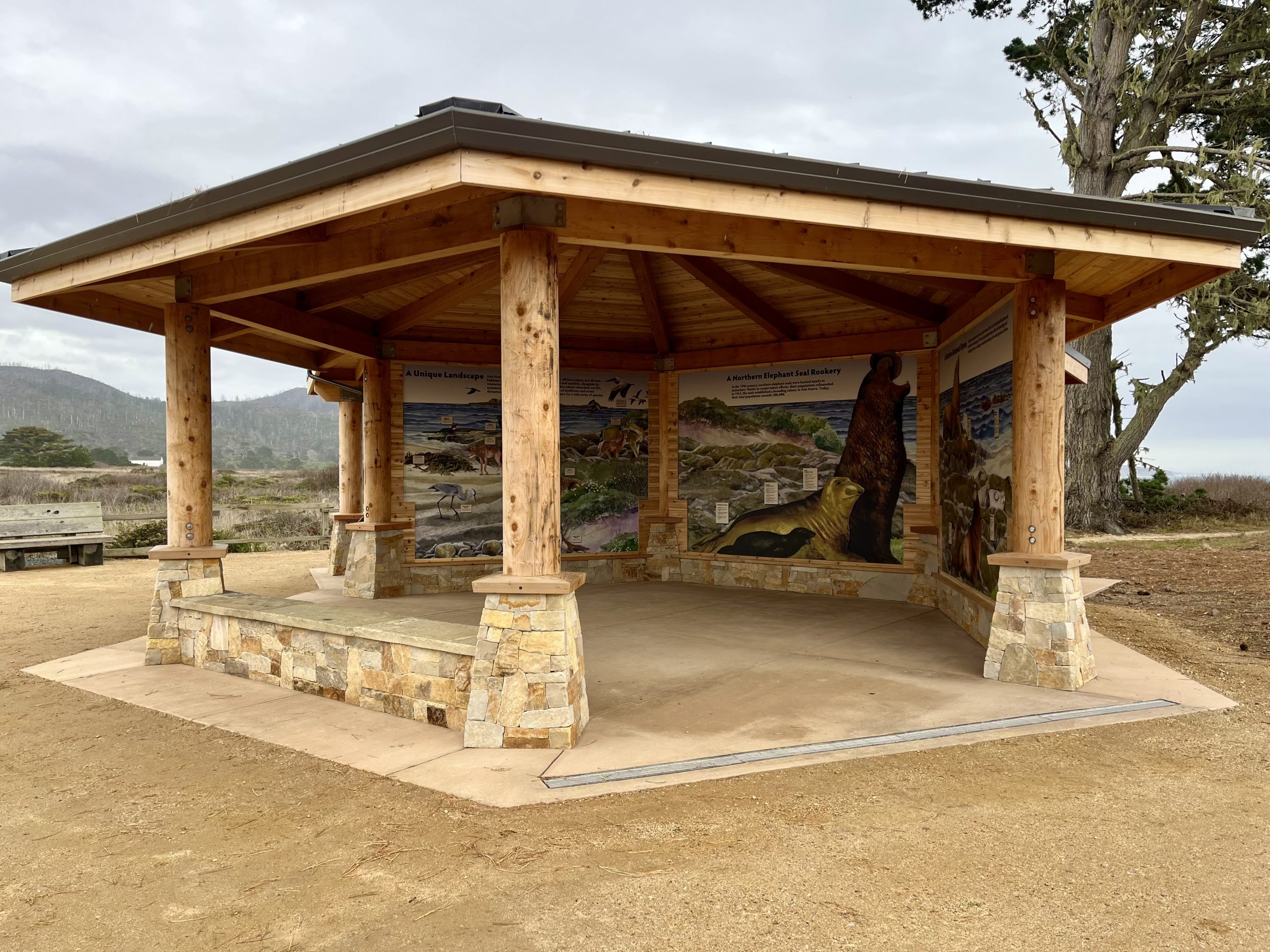


The park features a complex of buildings that were part of a 19th-century dairy ranch and now house an interpretive visitor center, park store, theater and state park offices.
While these restored buildings recall the early American settlers, midden sites throughout the Natural Preserve tell us that Quiroste Indians lived here for thousands of years prior to the 1700s.
The physical terrain of Año Nuevo is distinctive with coastal terrace prairie, wetland marshes, dune fields and coastal scrub hosting a high diversity of plants and animals, including the rare and endangered San Francisco Garter Snake and California Red-legged Frog. The area is on a major bird migratory route and is a fantastic birding location.
Just offshore sits Año Nuevo Island and the remains of a 19th-century lighthouse and fog signal station. Built in 1872, the original historic keeper’s house can be seen from shore; but access to the island is restricted to rangers and researchers because the island is both a Marine-Mammal and Bird Preserve. The light station was operational until 1948 when the functions were automated on a nearby buoy.
Otters, harbor seals, California sea lions are often sighted in the waters and Steller sea lions reside on the outlying rocks in the summer months.
Año Nuevo’s waters are protected by a Marine Protection Area (MPA). MPAs contribute to healthier, more resilient ocean ecosystems that can better withstand a wide range of impacts such as pollution and climate change. By protecting entire ecosystems rather than focusing on a single species, MPAs are powerful tools for conserving and restoring ocean biodiversity, and protecting cultural resources, while allowing certain activities such as marine recreation and research.
CSPA’S SUPPORT FOR AÑO NUEVO STATE PARK
With your generous donations, the Coastside State Parks Association can fund dozens of projects every year to assist our local State Parks. Many involve supporting the docent programs, maintaining interpretive signage, beautifying entry stations, improving access to the parks and funding many other day-to-day operations.
- Funding for new Staging Building
- Año Nuevo Point Trail repairs
- Support docent program
- Renovation of the boardwalk at the Life Cycle sign
- Interpretive signs throughout the park
- Telescopes for viewing at Bight Beach
- Operate Park Store**
- Renovation of Equal Access Boardwalk
- Funding of Equal Access van
** All proceeds directly support CSPA’s programs in the State Parks on the San Mateo Coast.
AÑO NUEVO STATE PARK NEWS & HIKES
- Renewable Solar Energy Installed at Año Nuevo (March 11, 2026)
- My Journey Año Nuevo Docent
(June 6, 2025) - Año Nuevo Celebrates Opening New Staging Area
(May 15, 2025) - Seal Adventure Wrap Up
(March 12, 2025) - Discover Franklin Point and the Northern End of Año Nuevo State Beach
(December 3, 2024) - Updates planned for Año Nuevo State Park
(HMB Review Jan 16, 2024)